
As Floods Shut Markets, Disrupt Farm Access and Deepen Farmers’ Poverty, Former APA President General Calls for Roads, Modern Markets, Water Transportation and Low-Interest Agricultural Loans
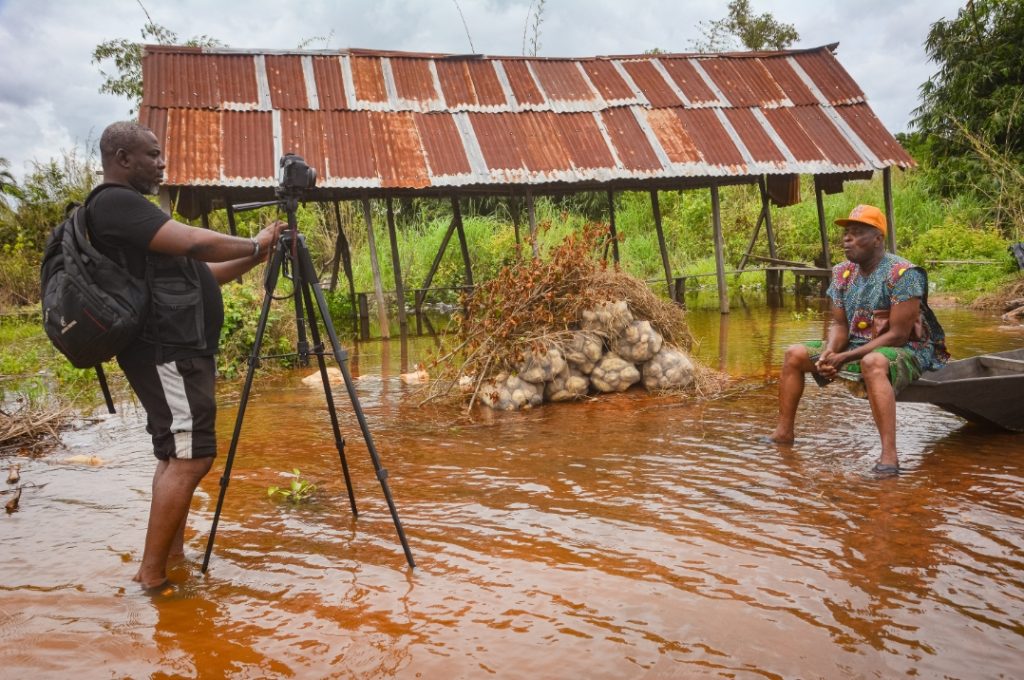
For years, annual flooding has disrupted communities across Anambra West, with Mmiata Anam among the areas repeatedly affected. Roads become difficult to navigate, markets are disrupted and farmers struggle to move their produce to buyers. Yet the story of flooding in Anam is more complicated than destruction alone. The same waters that disrupt economic activities also replenish the soil, support fish production and contribute to the agricultural productivity of the Omambala basin.
For Chief Mathias Ameke, former President General of the Anam People’s Assembly (APA), former Chairman of the Progressive Peoples Alliance (PPA), Anambra State Chapter, community leader and farmer from Mmiata Anam, the central challenge is not simply the presence of floodwater.
It is the failure to develop the infrastructure, markets, transportation systems and agricultural financing needed to manage the flood and convert Anam’s natural advantages into sustainable economic opportunities.
In this exclusive interview with AnamToday News, Chief Ameke discusses flooding, agriculture, rural infrastructure, roads, markets, water transportation, access to finance and what he believes government should do to unlock Anam’s economic potential.
Q: Flooding has remained a yearly challenge in Anambra West. How serious is the situation in Anam?
Chief Ameke: Flooding has been a perennial problem in Anambra West, particularly here in Mmiata Anam. But there is another side of the story that people sometimes fail to understand. We are major producers of food crops such as yam, cassava, pepper and other agricultural products. The flood itself is not entirely a bad thing. In fact, it has some benefits.
Whenever we experience a major flooding season, we normally have more fish in our waters. The flood also contributes to the regeneration of the soil, improving the fertility of our farmlands and supporting good agricultural yields.
So, in every difficult situation, there can also be an opportunity. The problem is that we have not developed the capacity and infrastructure required to maximise the opportunities that nature has given us.
Q: What do you mean by maximising the opportunities presented by the flood?
Chief Ameke: Look at places in other parts of the world where communities are located in low-lying areas and have historically faced flooding. They have used technology, engineering and infrastructure to manage the impact of water and keep economic activities running. That is what we should be doing here.
Take this beach at Mmiata Anam, for instance. There is a strategically located local market here, but every year when the flood comes, the market is shut down. The problem is not that government cannot do anything about it. The area can be raised to a higher level using modern engineering techniques so that floodwater will not submerge the market. Government should develop this place because of its strategic importance.
Q: What happens to farmers when the market becomes inaccessible?
Chief Ameke: It creates serious economic losses. When the market is flooded, even where the market itself is above water, the access roads are often cut off. Farmers cannot bring their produce here.
You have people harvesting yam, cassava, potatoes and other crops, but they cannot easily transport them to distant markets. Some of these products eventually spoil. That is money lost by the farmer.
The farmer has already spent heavily on clearing the land, planting, labour, transportation and other expenses. If, after harvest, he cannot sell the produce at a reasonable price, he cannot recover his investment.
Q: You mentioned that farming in Anam involves significant labour costs. What is driving those costs?
Chief Ameke: Our people are very committed to farming. We also bring in labourers from Ebonyi and other places to help us work on the farms. Because of our hospitality and the need to keep agricultural production going, farmers often provide accommodation, food and payment for these workers. That adds significantly to the cost of production.
Unfortunately, many farmers borrow money to finance their farms, sometimes at extremely high interest rates. By the time the harvest comes, they have to repay those loans. If the market price is poor, the farmer loses money. He may not even recover the money invested. This is one of the reasons poverty persists in a place like Anam despite the abundance of fertile land and experienced farmers.
Q: So, what is your assessment of the condition of farmers in Anam?
Chief Ameke: Our farmers remain very vulnerable. They produce food, but they do not necessarily benefit from the full value of what they produce. Once the harvest comes, the farmer is often at the mercy of traders because he has limited storage facilities and cannot preserve his crops for a better market.
If a farmer cannot store his produce, he has little bargaining power. Whatever price the market offers, he may be forced to accept because agricultural produce can perish. That is why government support is important.
Q: What specific forms of government support do you believe farmers need?
Chief Ameke: First, government should provide accessible agricultural loans at single-digit interest rates. Farming is capital-intensive. Farmers need money for land preparation, seedlings, fertiliser, labour, transportation and other inputs.
The present situation, where farmers depend heavily on expensive loans, is not sustainable. Government should also provide grants and agricultural inputs to serious farmers.
If farmers have access to affordable capital, they can expand production, preserve their harvest and make farming more profitable.
Q: What impact is this situation having on young people and their interest in agriculture?
Chief Ameke: It is discouraging young people from going into farming. If young people see their parents and older farmers working throughout the year but remaining poor after harvest, they will naturally look elsewhere for opportunities.
By November, many farmers have become financially exhausted and are already looking for money to begin another planting cycle. This cycle must be broken. If we want young people to return to agriculture, we must make farming economically attractive.
Q: You referred to the 2012 flood. What lessons did Anam learn from that experience?
Chief Ameke: In 2012, the flood was devastating. We raised our voices and cried for help because the situation was extremely serious. That period demonstrated clearly that infrastructure is critical to the survival of communities in flood-prone areas.
I will continue to appreciate the intervention of former Governor Peter Obi in this regard. It was during his administration that the first motorable road capable of providing access through the flooding season was constructed in this part of Anambra West.
Because of that road, people from Mmiata Anam, Umuoba Abegbu, Iyiora and other communities and settlements have been able to maintain access to the other side of the Omambala during difficult periods. In fact, the reason your crew can come here today for this interview is partly because of that intervention.
Q: Has the road network solved the accessibility problem completely?
Chief Ameke: No. It has helped, but there is still a lot to be done. We appreciate that the road has been extended towards Nzam, the headquarters of Anambra West Local Government Area. But many communities and parts of Anam and the wider Anambra West area still experience serious accessibility problems during the flooding season.
When communities are cut off, economic activities suffer. Farmers cannot move their produce, traders cannot move their goods and residents struggle to access essential services.
Q: You also mentioned the Mmiata Anam beach and its market. Why do you consider that location strategically important?
Chief Ameke: The location is strategically important because of its connection to the waterways. This area is situated along the Ezichi River, which connects communities including Ochii and Odeke and extends towards Ibaji in Kogi State.
We should be looking seriously at water transportation as an economic opportunity. If government develops this location properly, it can become an important commercial centre.
Imagine raising the land above the flood level, constructing standard market shops, warehouses and other facilities, and developing the waterways for transportation. Farmers and traders from communities along the river could bring their goods here rather than travelling long distances to Otuocha or Onitsha. That would create economic activity, generate revenue and open up the area.
Q: What exactly are you asking the Anambra State Government to do?
Chief Ameke: We are appealing to Governor Charles Chukwuma Soludo and the state government to pay attention to this area. The landscape around the Mmiata Anam beach should be raised to a level where floodwater cannot submerge the market. A modern market should be built, with standard shops, warehouses and facilities for traders to store their goods.
The roads connecting the communities should also be improved so that people can move throughout the year. We also need agricultural loans and grants at affordable rates.
I believe these things are achievable. It is not rocket science. What is required is political will, proper planning and investment.
Q: What is the larger development vision behind these demands?
Chief Ameke: Our vision is to transform Anam’s natural resources into economic opportunities. We have fertile land. We have experienced farmers. We have rivers. We have a large agricultural base. The question is: how do we build the infrastructure that will allow our people to make money from what God has given us?
We should not continue to see flooding only as a disaster. We need to manage it intelligently, protect communities from its destructive effects and take advantage of the benefits it brings. If government invests in roads, markets, storage facilities, water transportation and affordable agricultural financing, the economic situation of our people can change significantly. Anam has the land and the people. What we need is the infrastructure, capital and institutional support to unlock the potential.
Q: Finally, what is your message to the government and the people of Anam?
Chief Ameke: My message to government is simple: please do not wait until disaster happens before responding. Invest in Anam because it is an important agricultural and economic area. Support the farmers. Open up the roads. Develop the markets. Improve water transportation. Provide affordable agricultural finance.
And to our people, we should continue to work together and make productive use of the opportunities available to us. Our land is fertile and our people are hardworking. With the right support and infrastructure, Anam can produce more food, create more businesses and contribute even more significantly to the economy of Anambra State.